10+ Years ExperienceInsuredServing Chandler & the East Valley

10+ Years Experience · Insured

Sunken Concrete Repair in Chandler, AZ | Slab Stabilization

Sunken concrete repair covers settled flatwork of many types where the goal is to lift, fill, and stabilize the slab rather than replace it. Chandler Concrete Leveling repairs applicable sunken driveways, sidewalks, walkways, patios, pool decks, garage slabs, and commercial flatwork throughout Chandler using polyurethane foam injection and cementitious mudjacking when appropriate. With 10+ years of experience and insured, we evaluate the slab condition, the void, and the settlement before recommending whether lifting, void filling, stabilization, or replacement is the right response.

Repair can include lifting the slab back toward its original elevation, filling the void beneath it to restore support, stabilizing the subgrade, or — when the slab is not a suitable candidate — recommending replacement. Chandler's settlement patterns, from the disturbed fill and irrigation movement common in Ocotillo and Sun Groves to the drainage and washout seen along Arizona Avenue and Chandler Boulevard, show up across residential and commercial flatwork alike. We do not assume every sunken slab can be saved: honest evaluation of condition, cracking, settlement amount, and void context is what tells us whether leveling or replacement is the responsible recommendation.

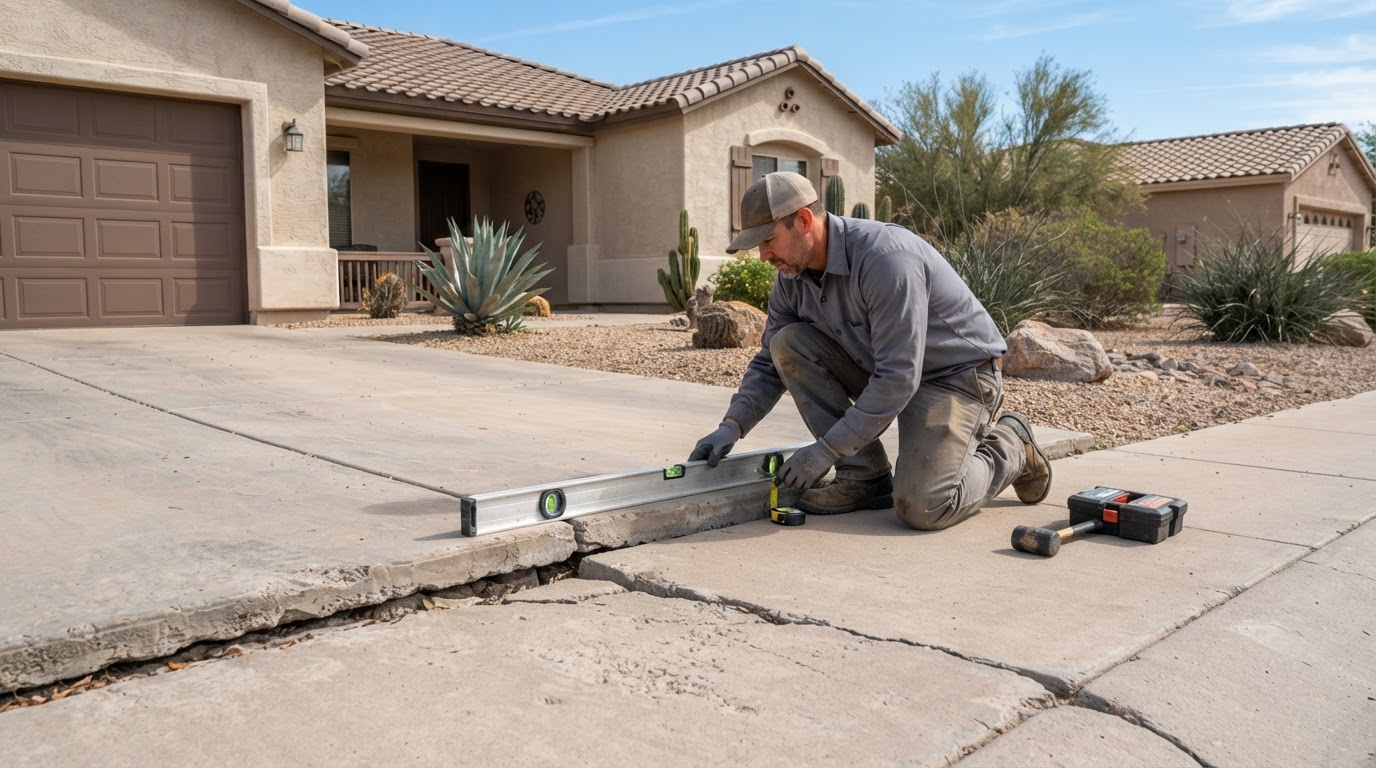
Concrete leveling technician assessing a sunken residential driveway slab with a misaligned joint at a stucco Arizona home, measuring settlement with a level

Request a Concrete Leveling Estimate

All fields are required. Get a straightforward estimate from a local concrete leveling specialist.

Consent is optional and not required to request an estimate. See our Privacy Policy and Terms & Conditions.

Chandler property owners choose us for sunken concrete repair because we evaluate the problem first, know multiple leveling methods, and are honest about when replacement is the better value.

10+ Years Experience

More than a decade evaluating and correcting settled flatwork across Chandler and the East Valley, on residential and commercial slabs alike.

Insured

Chandler Concrete Leveling is insured, so the work you hire us to perform is backed by appropriate coverage.

Problem-First Evaluation

We start with what the slab is actually doing — the settlement, the void, the cracking — and let the condition drive the recommendation rather than a default method.

Multiple Leveling-Method Knowledge

We choose between polyurethane injection and cementitious mudjacking based on the slab, the void, the lift, and the access.

Repair-vs-Replacement Honesty

When a slab is too broken or badly displaced to lift responsibly, we say so and explain why, instead of overselling a leveling job that will not hold up.

Void and Subgrade Awareness

We look for the void beneath the slab and the subgrade conditions that caused the settlement, so the repair addresses the cause and not just the symptom.

Transparent Pricing

You get clear planning ranges and an honest explanation of what moves the number before any work begins.

Local Chandler Conditions Knowledge

We recognize the irrigation, drainage, disturbed-fill, and wet/dry-cycle settlement patterns common to Chandler and the East Valley.

What Types of Sunken Concrete Can We Evaluate?

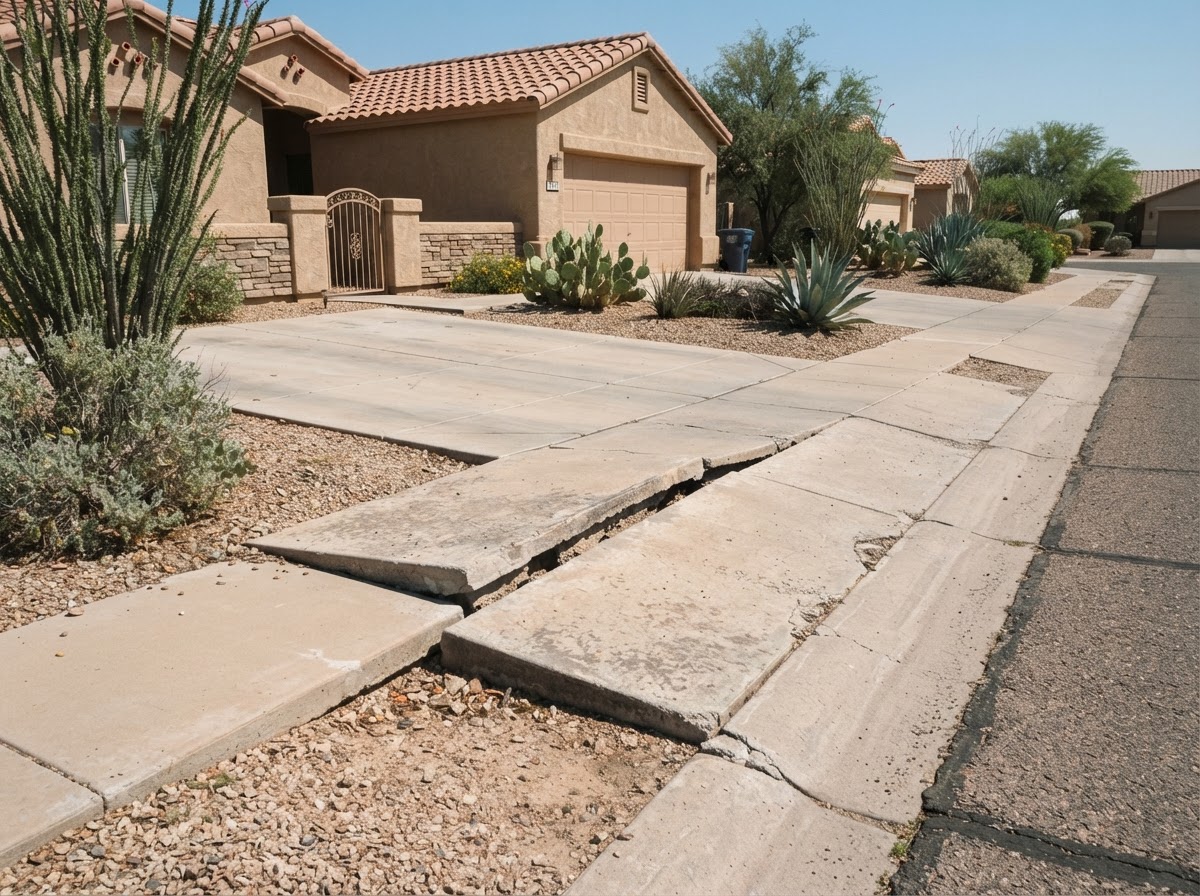
Settled residential driveway and sidewalk showing a sunken panel with a misaligned joint at a stucco Arizona home

Sunken Driveways

Sunken driveway repair lifts dropped or tipped driveway panels where vehicle loading, disturbed fill, or subgrade settlement has left one section lower than the next. It applies to single-family and multi-panel residential driveways across Chandler, where a misaligned joint becomes both a trip edge and a drainage trap.

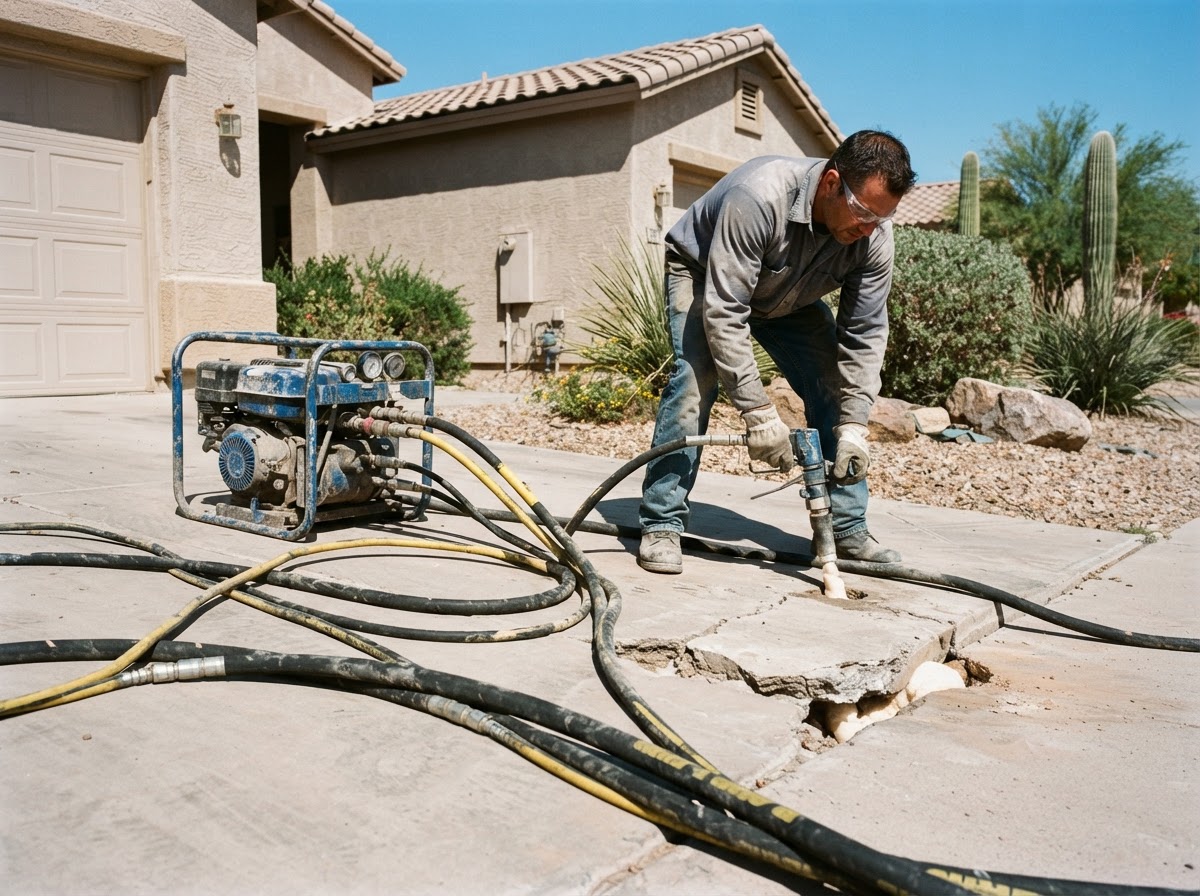
Polyurethane foam injection or cementitious mudjacking is used to fill the void beneath the settled panel and produce a controlled, measured lift, with elevation checked against the adjacent driveway panels and the garage approach. Small injection holes are laid out, the material is injected in sequence, and the lift is brought up gradually.

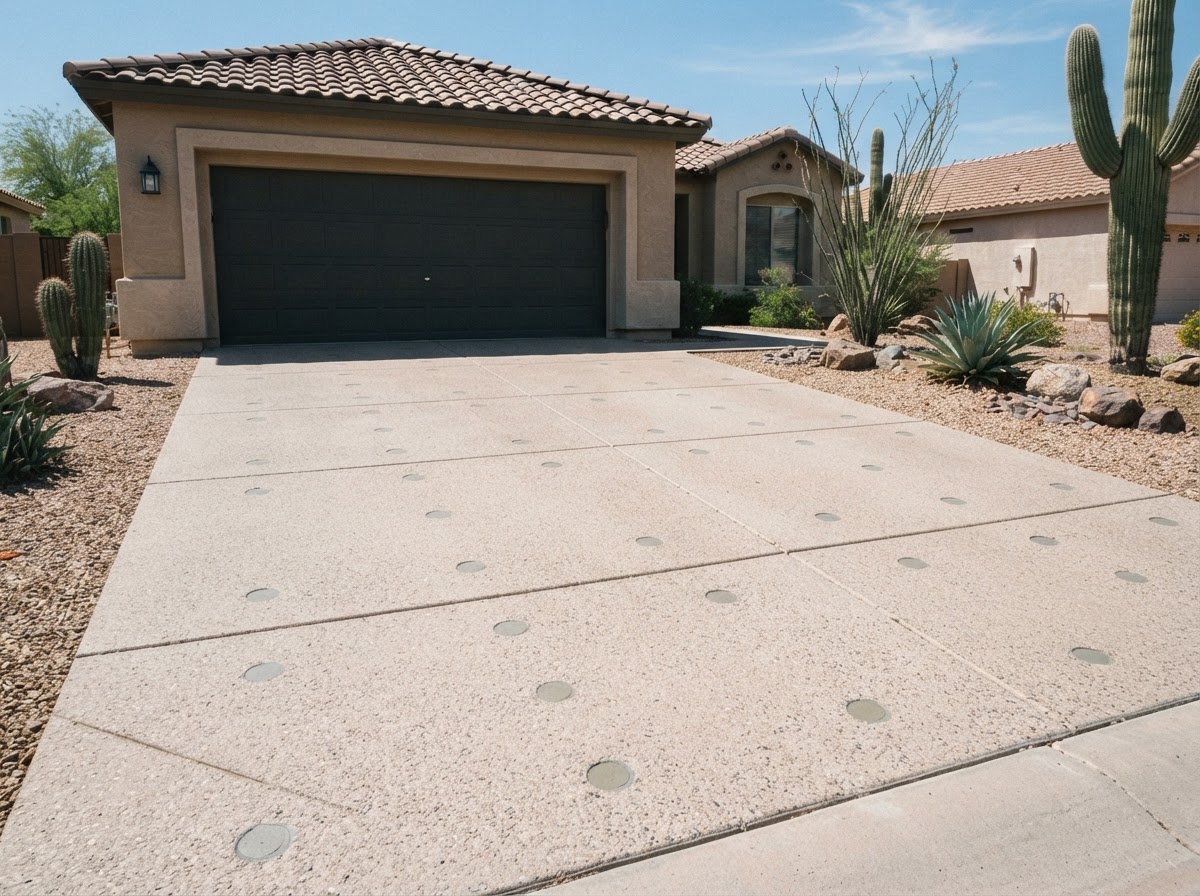
The result is a smoother, safer driveway surface with a reduced trip hazard at the joints, improved drainage direction where the grade allows, and clean patched injection points — without tearing out and repouring a slab that still has service life.

Professional concrete lifting injection equipment and hoses staged on a settled residential driveway slab during a sunken concrete repair lift in Arizona

Sunken Sidewalks and Walkways

Sunken sidewalk and walkway repair lifts settled or raised pedestrian panels back toward the adjacent surface to improve alignment and reduce trip edges. It applies to private-property sidewalks, front entry walkways, and common-area walking surfaces across Chandler.

Injection holes are placed through the settled panel and lifting material — polyurethane foam or a cementitious slurry — is injected beneath the slab to fill the void and raise the panel back toward the adjacent walkway. The lift is controlled and checked against the neighboring sections so the joint lines up cleanly.

Property owners get a safer walking surface with a reduced trip hazard, restored joint alignment, and patched injection points, which is usually far less disruptive than removing and repouring an entire sidewalk run.

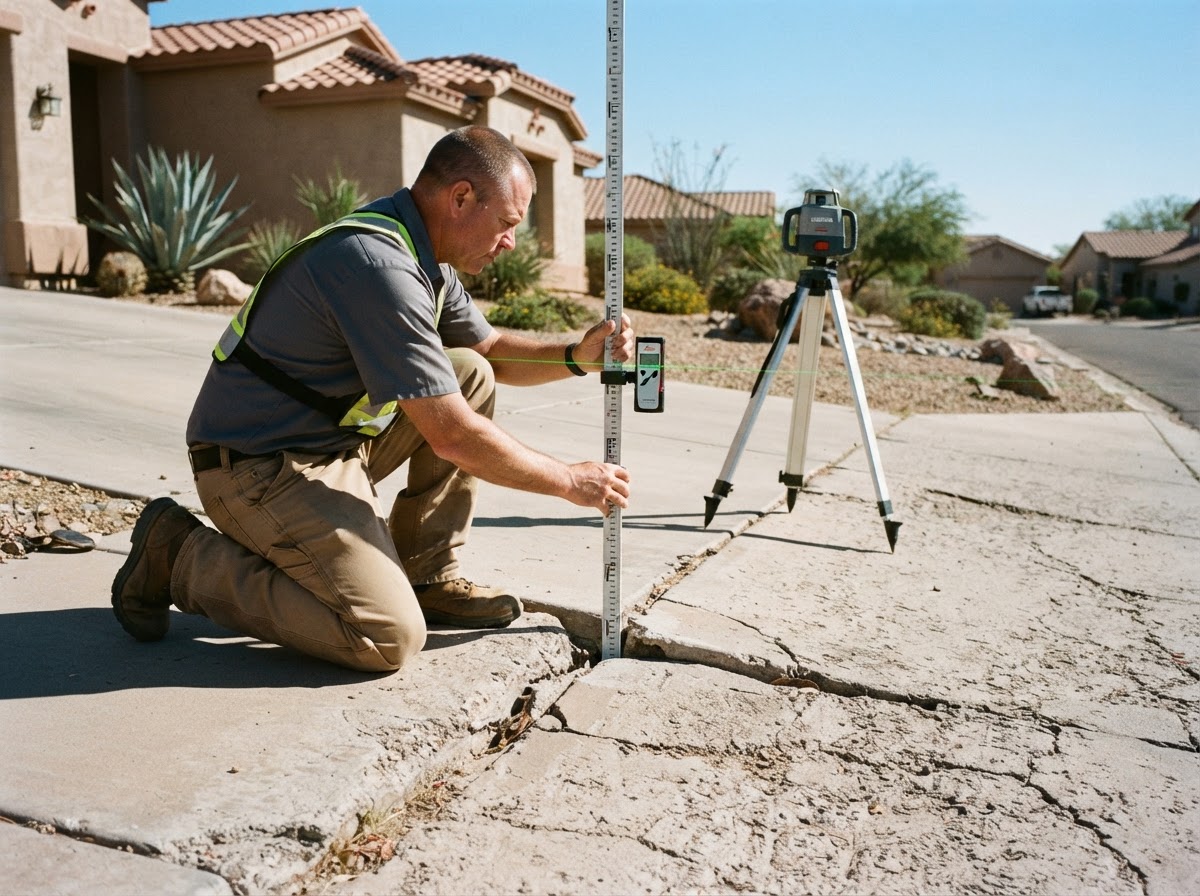
Technician measuring slab elevations across a settled concrete driveway panel with a laser level in Arizona

Sunken Patios and Pool Decks

Sunken patio and pool deck repair lifts settled backyard patio slabs and pool deck sections where irrigation, drainage, or fill settlement has dropped one section below another. It applies to poured concrete patios and pool decking common in Chandler desert-landscaped yards, where a tipped slab collects water and becomes uneven underfoot.

The void beneath the patio or pool deck slab is identified and filled by injecting polyurethane foam or cementitious mudjacking material through small ports, lifting the slab gradually while elevation is checked against the surrounding grade, coping, or the home's edge.

The surface is restored to a more usable, better-draining area with a reduced trip edge and clean patched holes, preserving the existing finish rather than requiring a full demolition and repour — especially valuable near water.

Leveled and stabilized residential concrete driveway with clean patched injection points and even panel joints at an Arizona home

Sunken Garage and Floor Slabs

Sunken garage and floor slab repair lifts settled garage or interior floor slabs where one section has dropped relative to the adjacent floor or the driveway approach, creating a lip and a drainage issue. It applies to attached residential garage slabs and interior floors across Chandler where a tipped surface traps water and trips feet.

The void beneath the settled slab is filled by injecting lifting material through small ports, and the slab is raised gradually with elevation checked against the neighboring floor and any thresholds. Method and material are chosen based on slab condition, void depth, and access.

The floor is restored toward a smoother, safer surface with a reduced step at the joints and improved drainage direction, without the cost and disruption of removing and repouring the slab.

Professional concrete lifting injection equipment and hoses staged on a settled residential driveway slab during a sunken concrete repair lift in Arizona

Sunken Commercial Flatwork

Sunken commercial flatwork repair lifts settled slabs at small commercial sites — storefront sidewalks, entry slabs, pedestrian areas, and interior floors — where a trip hazard or drainage issue affects customers and staff. It applies to private-property commercial flatwork across Chandler where a dropped panel has offset the joint.

Polyurethane foam or cementitious mudjacking is used depending on slab condition, void depth, and access, with the lift controlled and checked against adjacent surfaces. Commercial scopes may carry access, scheduling, and right-of-way considerations that residential work does not.

The business gets a safer pedestrian surface with a reduced trip hazard and restored alignment, typically with less downtime than demolition and replacement — important where keeping the site open matters.

Why Does Concrete Sink in Chandler?

Subgrade Compaction

When the soil or fill beneath a slab was not uniformly compacted before the pour, the subgrade can consolidate over time and leave a void the slab settles into.

Voids

Open space under a panel — from washout, settling fill, or erosion — removes support and lets the slab drop at that section.

Water Movement

Concentrated runoff, gutter downspouts, or landscape drainage can carry fine material out from under a slab, eroding the support layer and creating a void.

Washout

Washout from drainage or irrigation carries supporting material away from beneath the slab, leaving it unsupported and prone to dropping.

Drainage and Irrigation

Drainage directed toward the slab and irrigation near flatwork can keep the subgrade wet and prone to movement, especially with repeated wet/dry cycles.

Disturbed Fill, Loading, and Wet/Dry Cycles

Disturbed fill around improvements, sustained slab loading, and the repeated wet/dry cycles of the East Valley desert climate all contribute to settlement over time.

Signs Sunken Concrete Needs Professional Evaluation

Vertical Slab Offsets

When one panel sits visibly higher or lower than its neighbor at a joint, a void or settlement beneath the lower panel is a common cause.

Trip Edges

A vertical offset at a joint that catches a foot, a wheel, or a toe is a safety issue that leveling is specifically meant to reduce by bringing the panels back into plane.

Water Collecting at New Low Points

When surface drainage now runs toward a settled slab instead of away, the settlement has changed the grade and water is pooling where it should not.

Driveway and Garage Transition Changes

When the driveway-to-garage approach or the garage floor lip has changed, a panel has settled enough to shift the transition and create a hazard.

Visible Settlement

A panel that has visibly dropped relative to the surrounding surface is a primary candidate for controlled lifting when the slab is intact.

Slab Pulling Away and Void Indicators

When a slab pulls away from adjacent surfaces, or where a gap at an edge or erosion beneath the slab is observable, a void has likely removed support beneath the concrete.

Our Sunken Concrete Repair Process

  1. Step 1: Inspection

    We walk the slab, check for cracking, displacement, and joint misalignment, and identify which sections have settled and why.

  2. Step 2: Measure Settlement

    We measure the elevation difference between the settled panel and the adjacent surface to determine the amount of lift needed.

  3. Step 3: Assess Slab Condition

    We evaluate whether the slab is intact enough to lift or whether severe cracking, shattering, or deterioration makes replacement the better recommendation.

  4. Step 4: Identify Likely Support and Void Context

    We look for voids beneath the slab, water movement or washout patterns, and the subgrade conditions that caused the settlement.

  5. Step 5: Choose Lift, Fill Method, or Recommend Replacement

    We select polyurethane injection or cementitious mudjacking based on the slab and the void, or recommend replacement when the slab is not a suitable lifting candidate.

  6. Step 6: Controlled Repair, Patching, and Final Review

    Material is injected in a controlled sequence to fill the void and produce a gradual lift, injection points are patched, and the finished alignment is reviewed before the crew leaves.

How Much Does Sunken Concrete Repair Cost in Chandler?

The ranges below are typical market-level planning ranges for sunken concrete repair in the Chandler area, not binding quotes. Final price depends on the slab type, the void, the lift, and the access. An on-site evaluation determines the actual scope, method, and price for your slab.

Small localized repair

Approximately $500–$1,500

Typically covers a single settled panel or a focused trip-hazard lift. Minimum service charges can materially affect very small repairs.

Typical residential multi-slab repair

Approximately $800–$2,500

Covers a small group of residential panels such as a sidewalk run, patio section, or entry walkway. Slab count, lift, and access move the number.

Driveway or larger multi-panel repair

Approximately $1,200–$4,000+

Covers larger residential driveway and multi-panel scopes. Number of slabs, amount of lift, and material volume are the main drivers.

Large residential, commercial, or void-fill slab scope

Approximately $2,000–$6,000+

Reflects bigger slabs, deeper voids, heavier material volume, or commercial access constraints. Method and access strongly affect price.

What moves the number: number and size of slabs, amount of lift, depth and extent of voids, material volume, access, cracking and condition, surface type, and whether public-right-of-way constraints apply. We are not able to confirm a final price without evaluating the slab in person.

Request Your Estimate

Fill out the form and a team member will reach out about your Chandler project. All five fields are required; the text-message consent boxes are optional and never required to request an estimate.

Consent is optional and not required to request an estimate. See our Privacy Policy and Terms & Conditions.

Prefer to talk it through?

Call Chandler Concrete Leveling directly. We will ask a few questions about the slab, the settlement, and the access, and explain the likely scope and range.

Call 480-757-2345

10+ Years Experience · Insured

Should Sunken Concrete Be Lifted or Replaced?

Whether sunken concrete should be lifted or replaced depends on the slab's integrity, the severity of cracking, the surface condition, the number of fragments, the amount of settlement, the void condition, the drainage, the appearance goals, the access, and the overall project scope. A largely intact slab with manageable cracking and a modest void is a strong lifting candidate — leveling restores alignment and support for far less than tearing out and repouring. Replacement becomes the better value when the concrete is too far gone to lift responsibly.

Severe cracking, shattering, surface deterioration, many broken sections, severe displacement, or an underlying failure like drainage or subgrade collapse that needs rebuilding before any surface will hold all favor replacement. We do not promise that every slab can be saved, and we do not oversell a leveling job that will not hold up. Honest evaluation of the condition, the void, and the project goals is what lets us tell you whether lifting, partial replacement, or full demolition and replacement is the responsible recommendation for your sunken concrete.

Frequently Asked Questions

Can sunken concrete be repaired without replacement?

Sunken concrete can often be repaired without replacement when the slab remains substantially intact and the underlying problem is a void or settlement that lifting and stabilization can address. Polyurethane foam or cementitious mudjacking is injected beneath the settled panel to fill the void and raise it back toward the adjacent surface. If the slab is severely cracked, shattered, or deteriorated, replacement may be the more appropriate recommendation.

How much does sunken concrete repair cost in Chandler?

Sunken concrete repair in Chandler typically runs about $500–$1,500 for a small localized repair, $800–$2,500 for a typical residential multi-slab project, $1,200–$4,000+ for driveway or larger multi-panel work, and $2,000–$6,000+ for large residential, commercial, or void-fill scopes. Slab count, lift, void depth, and access move the number. These are planning ranges, not binding quotes.

What causes a concrete slab to sink?

A concrete slab sinks because of inadequate or uneven subgrade compaction, voids beneath the slab, water movement and washout, drainage and irrigation near the flatwork, disturbed fill, slab loading, and repeated wet/dry cycles. Not every property shares the same cause, so a slab should be evaluated on its own conditions rather than assumed to fit one pattern.

What methods can be used to lift sunken concrete?

The methods used to lift sunken concrete are polyjacking — expanding polyurethane material injected through smaller holes — and mudjacking or slabjacking — a cementitious slurry pumped through larger holes. Neither is universally better; the choice depends on slab condition, void depth, lift requirement, access, and cost. We select the method based on the specific slab.

Can sunken concrete be stabilized if there is a void underneath?

Sunken concrete can often be stabilized when there is a void underneath by injecting lifting material — polyurethane foam or cementitious slurry — through ports into the open space beneath the slab. The fill restores the support layer and, where the slab has already settled, can also produce a controlled lift. We assess the void and the slab condition before recommending the approach.

Will lifting fix existing cracks?

Lifting will not reliably fix existing cracks. Restoring alignment can narrow some movement at a crack as the slab is brought back toward elevation, but cracks that are already part of the slab generally remain visible. Crack appearance is separate from the lift, and leveling is not a crack-repair or resurfacing method.

When should sunken concrete be replaced instead?

Sunken concrete should be replaced instead of lifted when it is severely cracked, shattered, or deteriorated, when there are many broken sections, when displacement is severe, or when an underlying failure like drainage or subgrade collapse needs to be rebuilt first. A slab with limited, manageable cracking can often still be lifted. An honest on-site evaluation tells you which path applies.
Request Sunken Concrete Repair in Chandler

Call now, or send your project details and a team member will reach out about your sunken concrete.

10+ Years Experience · Insured

Call 480-757-2345

Send Your Estimate Request

All five fields are required. The text-message consent boxes are optional and never required to request an estimate.

Consent is optional and not required to request an estimate. See our Privacy Policy and Terms & Conditions.

Call Chandler Concrete Leveling

A short phone call is often the fastest way to understand whether leveling is the right fit for your slab.

Call 480-757-2345
  • 10+ Years Experience
  • Insured
  • Chandler & East Valley service expertise