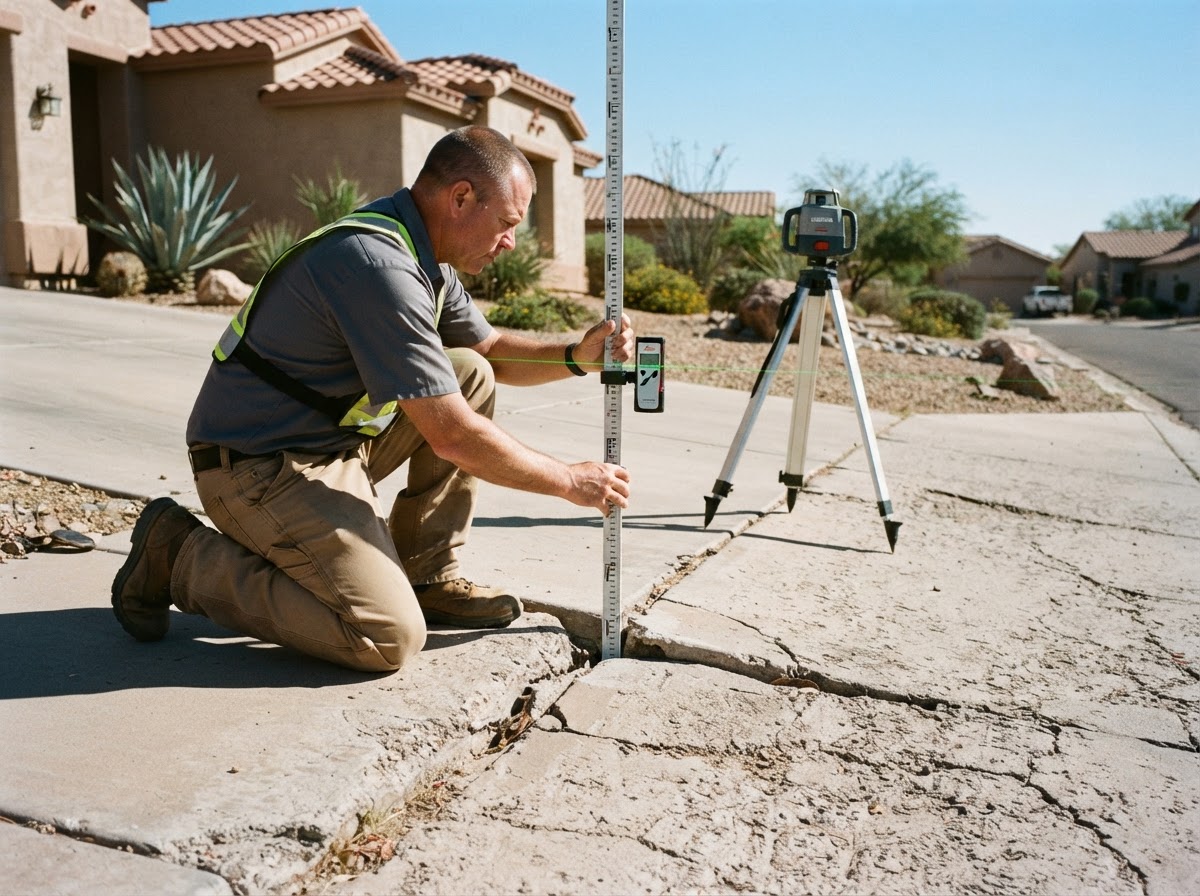
What causes voids under concrete?
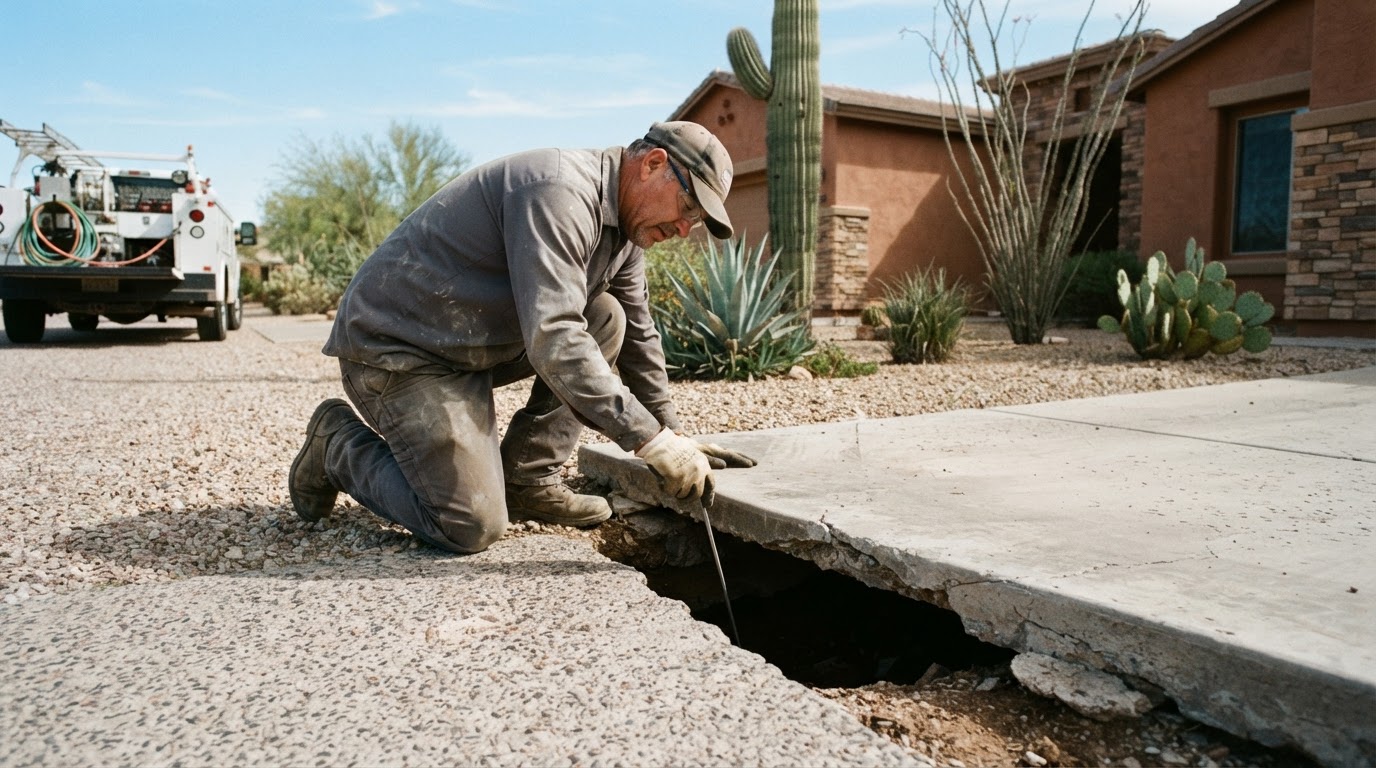
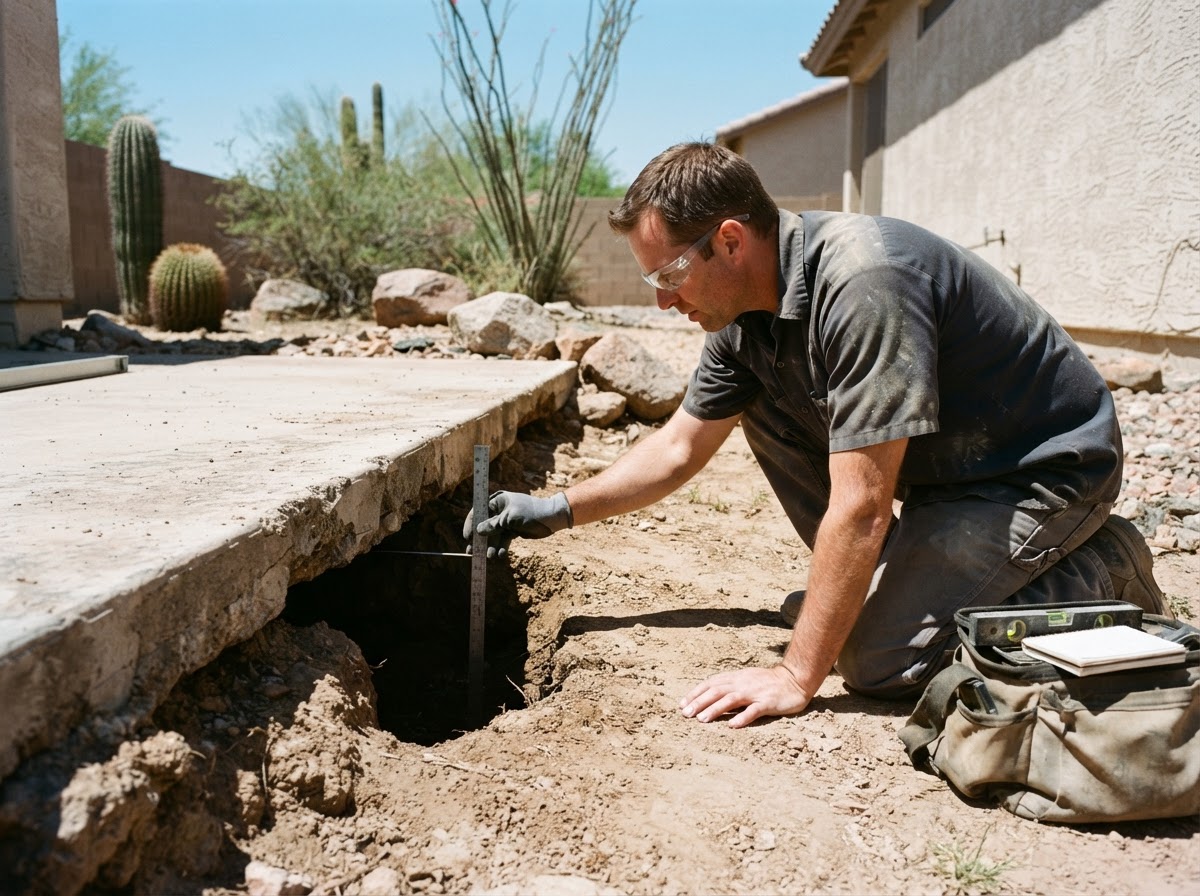
Voids under concrete are caused by washout, poor subgrade compaction, soil movement, water migration, irrigation leaks and overspray, disturbed fill, and the loss of supporting material beneath the slab. Not every property shares the same cause, so the void and the conditions that created it should be evaluated rather than assumed.
How do you fill a void beneath a slab?
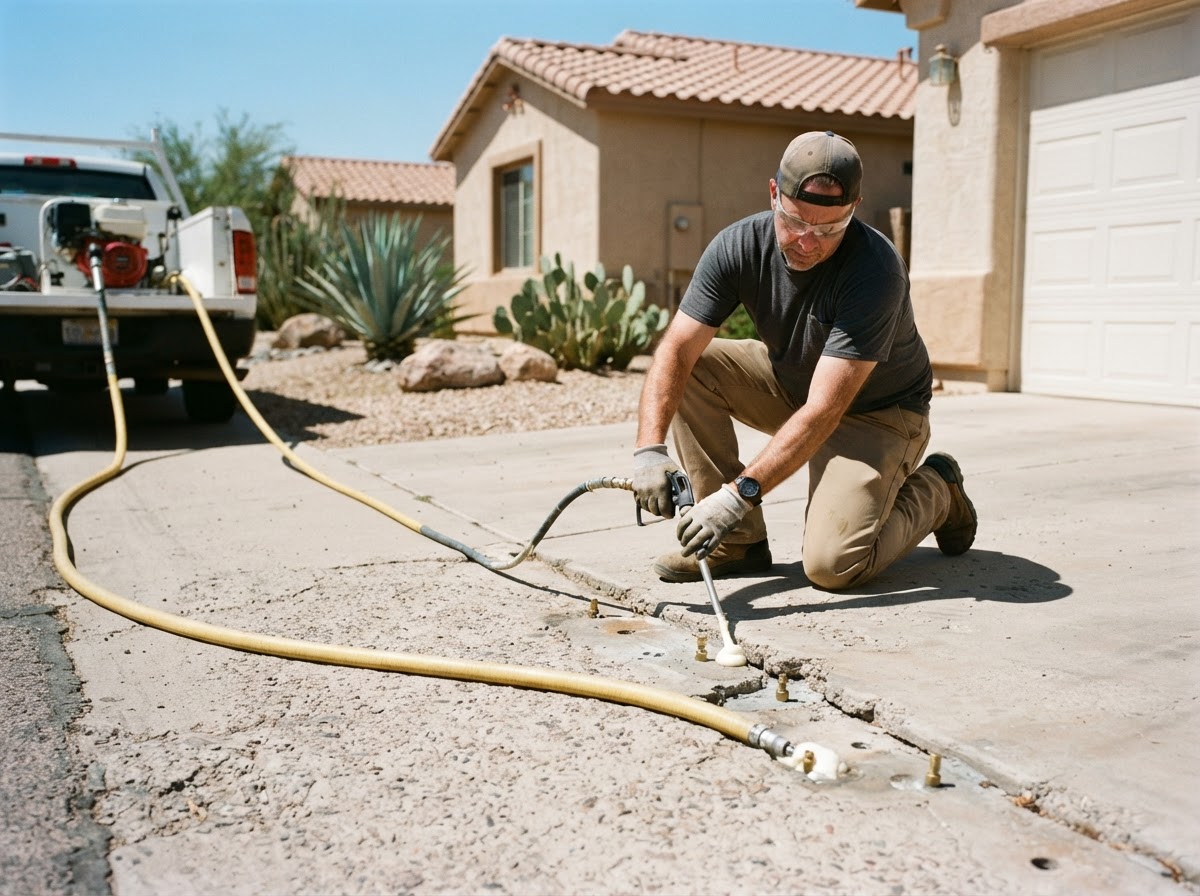
A void beneath a slab is filled by injecting lifting material — polyurethane foam or cementitious slurry — through small ports into the open space beneath the concrete. The material restores the support layer and, where the slab has settled, can also produce a controlled lift. We assess the void and the slab condition before recommending the approach.
Does void filling always lift the concrete?
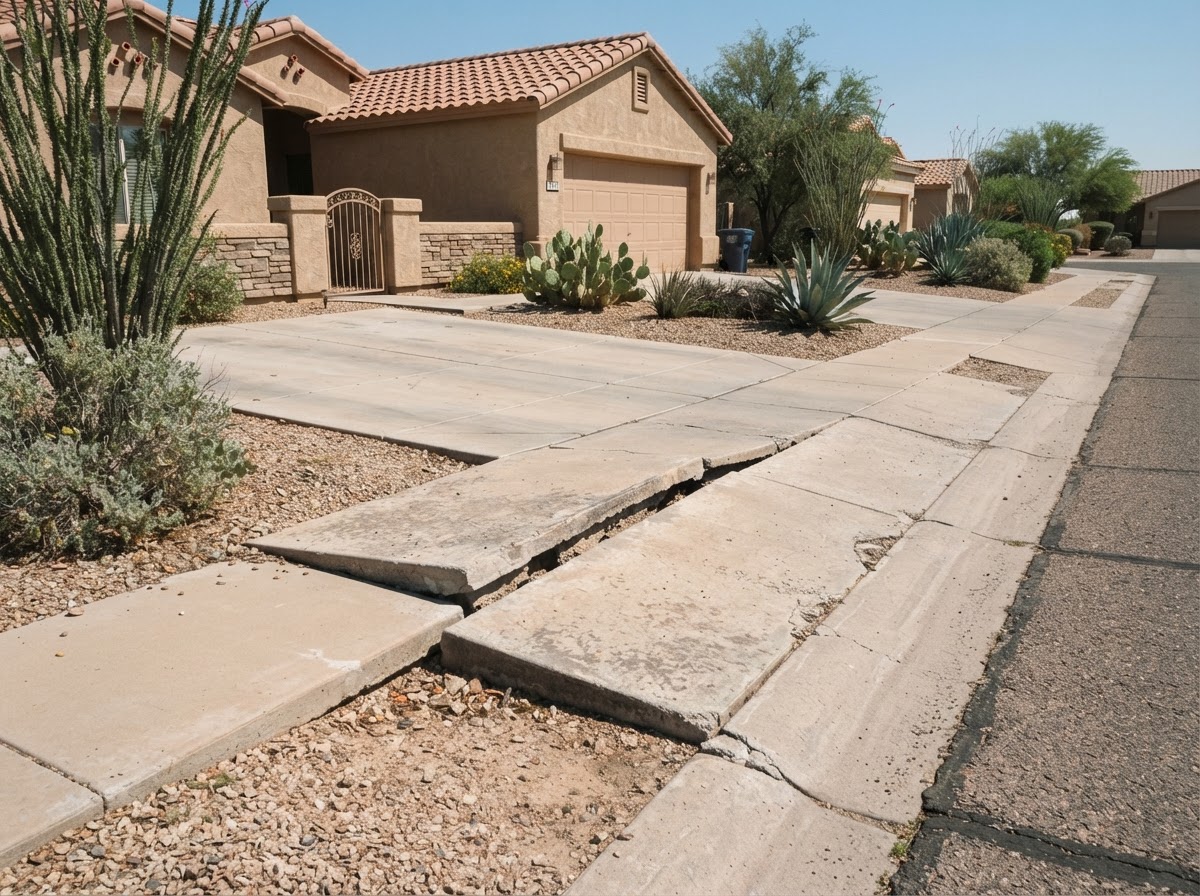
Void filling does not always lift the concrete. Some projects focus primarily on restoring support beneath a slab that has not dropped much, while others include controlled lifting where the slab has already settled. We assess the void, the slab, and the objective before recommending whether the goal is fill, lift, or both.
How much does concrete void filling cost in Chandler?
Concrete void filling in Chandler typically runs about $600–$1,500 for a small localized scope, $1,000–$2,500 for typical residential work, $1,500–$4,000+ for larger driveway, garage, or pool-deck scopes, and $2,500–$6,000+ for commercial, warehouse, or extensive voids. Void size, depth, material volume, and whether lift is required move the number. These are planning ranges, not binding quotes.
Can polyurethane foam fill voids beneath concrete?
Polyurethane foam can fill voids beneath concrete when the slab and access support it. The expanding material is injected through small ports into the open space, where it fills the void and restores the support layer. We choose between polyurethane and cementitious mudjacking based on the specific void and slab.
Can mudjacking material fill slab voids?
Mudjacking material — a cementitious slurry — can fill slab voids when the slab, the void, and the access suit the method. The slurry is pumped through larger injection holes into the open space beneath the slab to restore support. We choose between cementitious mudjacking and polyurethane based on the specific void and slab.
When is replacement better than void filling?
Replacement is better than void filling when the slab is severely cracked, shattered, or deteriorated, when the void is too large or active to address by filling alone, or when an underlying drainage or subgrade failure needs to be rebuilt first. A slab with limited cracking can often still be stabilized. An honest on-site evaluation tells you which path applies.