10+ Years Experience · Insured
Concrete Leveling Services in Queen Creek, AZ
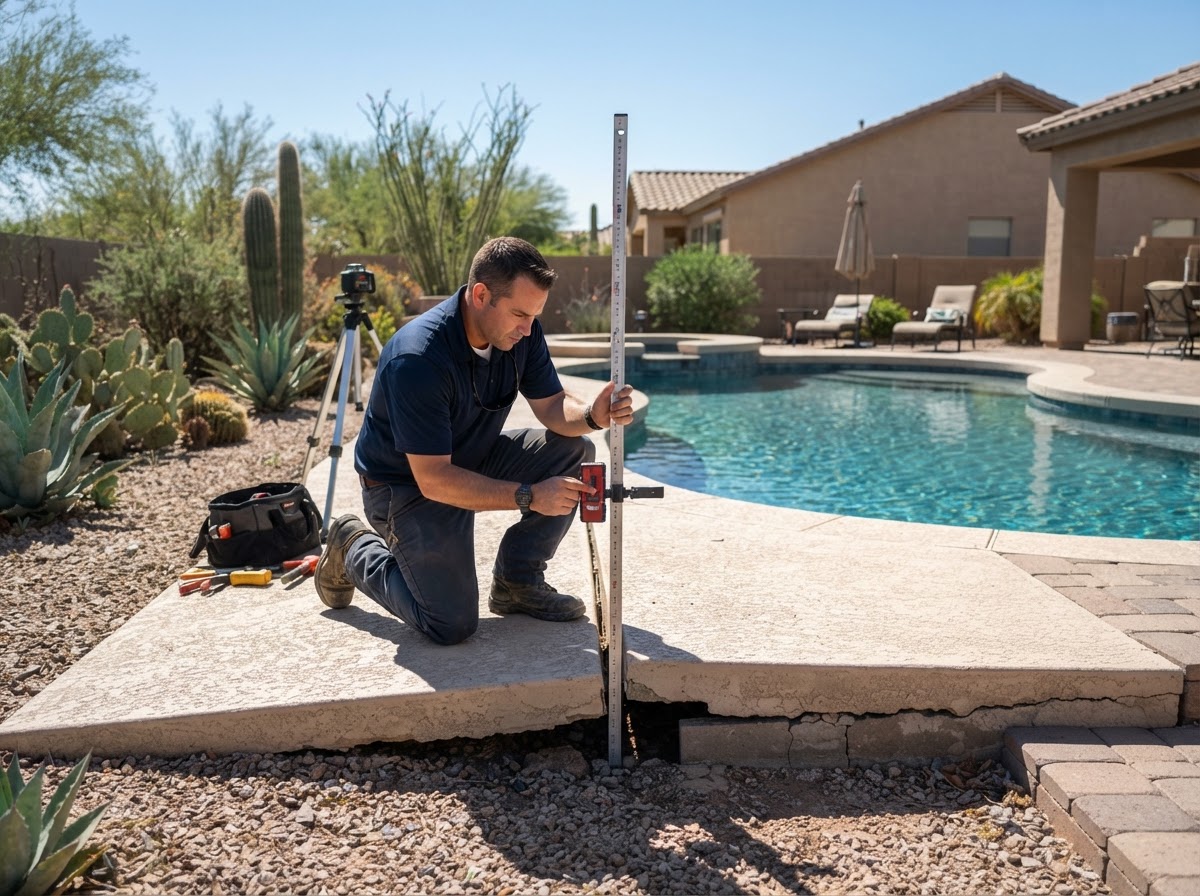
Chandler Concrete Leveling provides concrete lifting and slab-leveling services in Queen Creek for suitable driveways, walkways, patios, pool decks, garage approaches, and other settled residential flatwork. Queen Creek is a fast-growing East Valley community with substantial newer residential development alongside established properties, and large residential lots mean driveways, front walks, backyard patios, and pool-area concrete are common leveling requests. With 10+ years of experience and insured, we evaluate each slab on its own conditions before recommending a method.
Construction on disturbed or placed fill can make compaction and long-term slab support important considerations where applicable, and irrigation, landscape watering, drainage concentration, and runoff can contribute to localized erosion or void formation around exterior slabs. Polyurethane foam injection and cementitious mudjacking each suit different Queen Creek slabs, and we choose based on the panel condition, the void, and the access rather than defaulting to one technique. We do not assume every newer slab is poorly compacted, and we confirm coverage as part of the estimate.
Request a Concrete Leveling Estimate
All fields are required. Get a straightforward estimate from a local concrete leveling specialist.
Why Queen Creek Property Owners Choose Chandler Concrete Leveling
Queen Creek property owners choose us because we specialize in residential flatwork leveling, we understand newer-growth settlement patterns, and we are honest about when a slab can be lifted and when replacement makes more sense.
10+ Years Experience
More than a decade evaluating and correcting settled residential flatwork across Chandler and the East Valley, including the newer-growth communities of Queen Creek.
Insured
Chandler Concrete Leveling is insured, so the work you are hiring us to perform is backed by appropriate coverage.
East Valley Leveling Specialization
We concentrate on slab lifting and stabilization — not generic decorative concrete or unrelated trades — so the evaluation stays focused on your settled flatwork.
Residential Flatwork Focus
Driveways, walkways, patios, pool decks, and garage approaches are the surfaces we evaluate most often in Queen Creek's large-lot residential settings.
Polyjacking and Mudjacking Knowledge
Both polyurethane foam injection and cementitious mudjacking are available, and we choose based on the slab, the void, and the access — not a one-size-fits-all default.
Clear Repair-vs-Replacement Evaluation
When a Queen Creek slab is too broken or badly displaced to lift responsibly, we say so and explain why, instead of overselling a leveling job that will not hold up.
Drainage and Subgrade Awareness
We look for irrigation, runoff, and fill-compaction context around your slab, because understanding why it settled is part of recommending the right fix.
Transparent Pricing
You get clear planning ranges and an honest explanation of what moves the number before any work begins, not vague deflections.
Concrete Leveling Services We Provide in Queen Creek
These are the surfaces Queen Creek property owners most often ask us to level. Each block follows the same three-part explanation — what the service is, how the work is performed, and the practical outcome for the property.
Driveway Leveling
Driveway leveling addresses settled driveway panels in Queen Creek where one section has dropped below another, creating a vertical offset at the joint or a lip at the garage approach. This is common on large residential lots where disturbed fill and irrigation edges affect the subgrade beneath the driveway slabs.
Polyurethane foam injection or cementitious mudjacking is used to fill the void beneath the settled panel and produce a controlled lift, with injection ports placed through the slab and elevation checked against the adjacent panels. The method is chosen based on the slab condition, the void depth, and the access.
The practical outcome is a driveway surface brought back toward its original alignment, with the trip edge and vehicle transition reduced and the injection points patched. We do not promise that every driveway panel can be saved, and severely cracked slabs may need replacement.
Learn moreSidewalk & Walkway Leveling
Sidewalk and walkway leveling corrects dropped front-walk and entry-path panels in Queen Creek where a settled section has created a trip hazard at the joint. Front walks on newer residential lots are a frequent request where landscape watering and drainage have moved material beneath the slab.
Small injection holes are drilled through the settled panel and lifting material — polyurethane foam or cementitious slurry — is placed beneath the slab to fill the void and raise the section gradually. Elevation is monitored against the adjacent walkway panels to restore joint alignment.
The result is a smoother walking surface with the trip edge reduced and the injection points patched, without repouring the entire walkway run. Public sidewalk or right-of-way work may carry separate requirements that should be confirmed before proceeding.
Learn morePatio Leveling
Patio leveling lifts settled backyard patio slabs in Queen Creek where one section has tipped below another or pulled away from the adjoining surface. Backyard patios on large residential lots are exposed to irrigation, roof runoff, and drainage concentration that can erode the support layer.
Lifting material is injected through small ports to fill the void beneath the patio slab and produce a controlled lift, with the method selected based on slab condition, void depth, and backyard access. Elevation is checked against the surrounding grade and adjoining surfaces.
The outcome is a patio surface restored toward its original alignment, with the trip edge and drainage low spot reduced and the injection points patched. We do not promise that leveling alone fixes every drainage issue, and severely deteriorated patios may need replacement.
Learn morePool Deck Leveling
Pool deck leveling addresses settled pool deck sections in Queen Creek where a panel has dropped and created a trip edge near the pool. Pool-area concrete is a safety-sensitive surface where a vertical offset at the joint matters more than on ordinary flatwork.
Controlled lifting material is injected through small ports to fill the void beneath the deck section and raise it gradually, with equipment positioned safely away from the pool edge and elevation monitored against the adjacent deck. We do not perform work on pool shells, plumbing, or coping replacement.
The result is a pool deck surface brought back toward alignment, with the trip edge reduced and the injection points patched. Severely cracked or deteriorated deck sections may need replacement instead of lifting.
Learn moreGarage Floor / Garage Approach Leveling
Garage floor and garage approach leveling corrects the transition between the driveway and the garage slab in Queen Creek where settlement has created an abrupt lip or a dropped garage slab section. This is a common request on newer properties where fill beneath the approach has settled.
Lifting material is injected beneath the settled slab section to fill the void and produce a controlled lift, with the method chosen based on the slab condition, the void, and the access. Elevation is checked against the driveway and the garage floor to restore the transition.
The outcome is a smoother vehicle transition and a reduced trip edge at the garage, with the injection points patched. We do not perform structural foundation repair, and some crack patterns may require a different type of evaluation.
Learn morePolyjacking
Polyjacking uses expanding polyurethane material injected through comparatively small holes to fill voids and produce controlled lift where the Queen Creek slab is a suitable candidate. It is a distinct method from mudjacking and is appropriate for driveways, walkways, patios, pool decks, and garage slabs where the smaller injection holes and lighter material suit the surface.
Injection ports are placed through the slab and expanding polyurethane material is injected in controlled stages to fill the void and lift the panel, with elevation monitored against the adjacent surfaces. The material behavior and hole size differ from cementitious mudjacking.
The practical outcome is a lifted slab with small patched injection points and restored alignment. We do not claim polyjacking is universally superior, and the method is chosen based on the slab condition and the project.
Learn moreMudjacking
Mudjacking, or slabjacking, uses a cementitious or slurry-based lifting material placed beneath suitable Queen Creek concrete to fill void space and help raise settled sections. It is a distinct method from polyurethane lifting and typically requires larger injection holes than polyjacking.
A cementitious slurry is placed through planned injection locations beneath the slab to fill the void and produce a gradual lift, with elevation checked against the surrounding panels. The heavier material and larger holes make it a different tool than polyurethane foam injection.
The result is a raised slab with patched injection points and restored alignment. We do not claim mudjacking is universally superior, and severely broken slabs may need replacement rather than lifting.
Learn moreConcrete Void Filling
Concrete void filling addresses open space beneath Queen Creek slabs where washout, settling fill, or erosion has removed support. Void filling may occur with or without meaningful slab lifting depending on the condition and the objective, and it applies to driveways, walkways, patios, pool decks, and garage slabs.
Lifting material — polyurethane foam or cementitious slurry — is placed through injection ports to fill the void and restore support, with the approach selected based on whether the goal is primarily stabilization or includes controlled elevation correction. We determine whether fill, lift, or replacement is appropriate.
The outcome is a slab with restored underlying support and patched injection points. We do not imply every hollow-sounding area is a dangerous void, and some conditions may need replacement.
Learn moreQueen Creek Concrete Leveling Services
Dedicated Queen Creek pages for the most common leveling requests:
Why Does Concrete Settle in Queen Creek?
Queen Creek's growth pattern means settlement causes vary by neighborhood and development phase. These are possible causes, not universal conditions, and a slab should be evaluated on its own conditions rather than assumed to fit a single pattern.
Uneven Compaction
When the soil or fill beneath a Queen Creek slab was not uniformly compacted before the pour, the subgrade can consolidate over time and leave a void the slab settles into. This is a possible cause on disturbed or placed fill, not a universal condition.
Disturbed Fill
Construction on placed or disturbed fill can affect long-term slab support where the fill settles differently than the surrounding native soil. Newer-growth areas may see this where fill was brought in to level a lot before the pour.
Void Development
Open space under a panel — from washout, settling fill, or erosion — removes support and lets the slab drop at that section. Voids can develop gradually and are not always visible from the surface.
Water Migration
Concentrated runoff, gutter downspouts, or landscape drainage can carry fine material out from under a Queen Creek slab, eroding the support layer over time. Water movement is one of the most common settlement contributors.
Irrigation and Runoff
Landscape watering and irrigation keep the subgrade wet and can move material beneath exterior slabs. On large residential lots, drainage concentration and runoff patterns can contribute to localized erosion around flatwork.
Localized Subgrade Settlement
Slab age, loading, and the specific fill history of a Queen Creek lot all affect whether and where a panel settles. Two slabs on the same street can behave differently because their underlying conditions differ.
Common Concrete Problems Around Queen Creek Homes
Driveway Panels Settling Between Joints
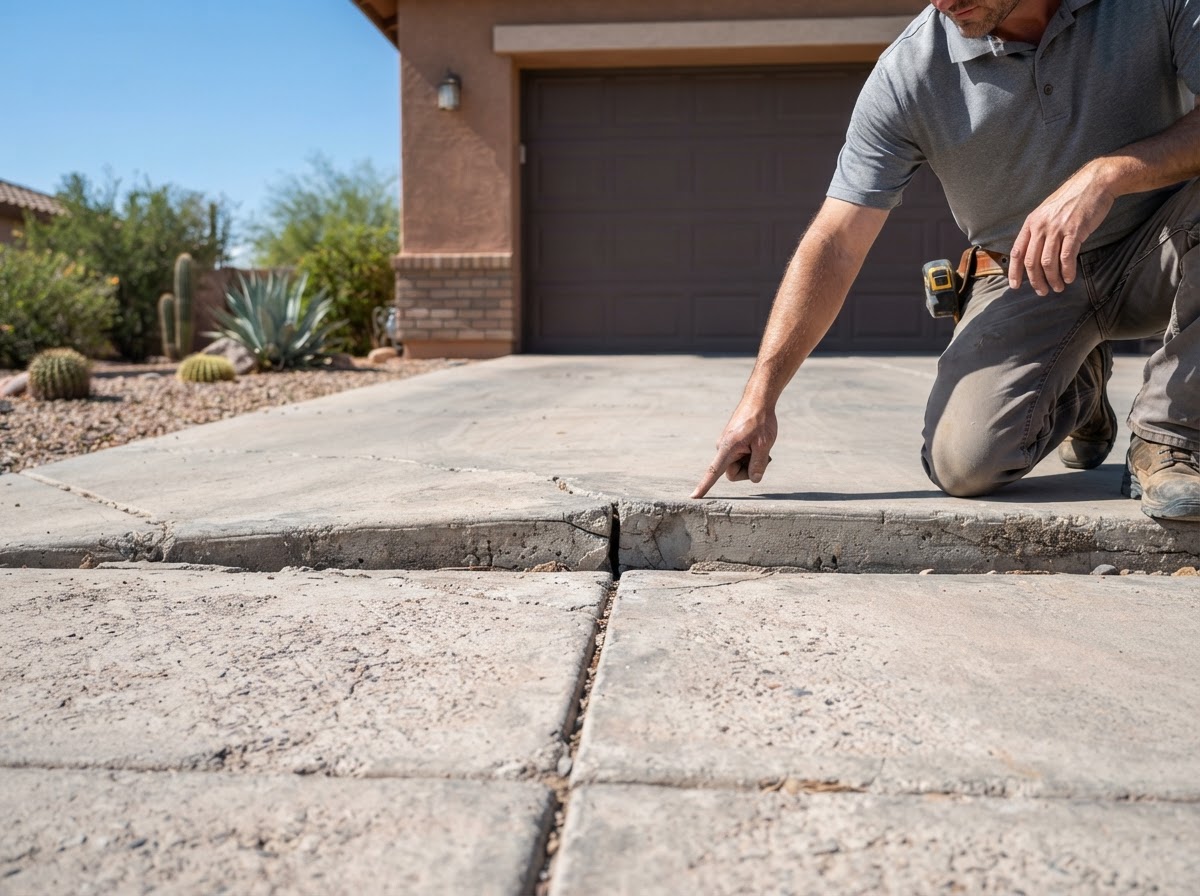
A driveway panel that has dropped below its neighbor creates a vertical offset at the control joint and an abrupt vehicle transition. This is one of the most common Queen Creek leveling requests, and it usually means a void or settlement beneath that panel. Lifting can often restore alignment without repouring the driveway.
Garage Approach Misalignment
When the slab between the driveway and the garage settles, the lip becomes noticeable every time you pull in. Fill beneath the approach is a frequent culprit on newer properties. Lifting the approach section back toward the garage floor reduces the transition without replacing the slab.
Walkway and Entry Trip Edges
A dropped front-walk panel offsets the joint and creates a trip edge at the entry. On Queen Creek's large residential lots, landscape watering and drainage often contribute. Lifting the lower panel restores joint alignment and reduces the hazard without repouring the run.
Patio and Pool Deck Settlement
Backyard patio and pool deck sections can tip where irrigation, roof runoff, or drainage has eroded the support layer. A settled pool deck section is a safety concern near water. Lifting can often restore alignment, though severely deteriorated slabs may need replacement.
Voids Beneath Exterior Slabs
Washout and settling fill can leave open space beneath a driveway, walkway, or patio slab without an immediately obvious surface sign. Void filling restores support and can prevent further settlement. We evaluate whether fill, lift, or replacement is the right approach.
Areas and Corridors We Serve Around Queen Creek
Queen Creek's broad growth pattern means slab age and installation quality vary by neighborhood and development phase. Relevant road and corridor context includes Queen Creek Road, Ellsworth Road, Rittenhouse Road, and the State Route 24 / Gateway-area connection, which help define practical service coverage from our Chandler-side base. These roads are geographic context only, not customer project claims.
We serve established and newer housing areas across Queen Creek subject to project type, slab condition, access, and scope. Coverage is confirmed as part of the estimate rather than promised before evaluation, and we do not imply service at any specific landmark or subdivision as a completed project.
Permits, Public Sidewalks, and Property Responsibility in Queen Creek
Private-property concrete leveling in Queen Creek is distinct from work affecting a public right-of-way or municipality-controlled concrete. A settled driveway, patio, or garage slab on your own property is generally a private-property scope. Work that touches a public sidewalk, a utility-restoration area, or other right-of-way may have different requirements, and that scope should be confirmed with the appropriate local authority before proceeding.
HOA or common-area work can involve separate ownership or approval considerations, and we do not invent specific permit rules or code sections. We do not claim that permits are never required. Where a project runs along a public sidewalk or right-of-way, identifying what requirements may apply is part of responsible scoping.
How Our Queen Creek Concrete Leveling Projects Work
Evaluation
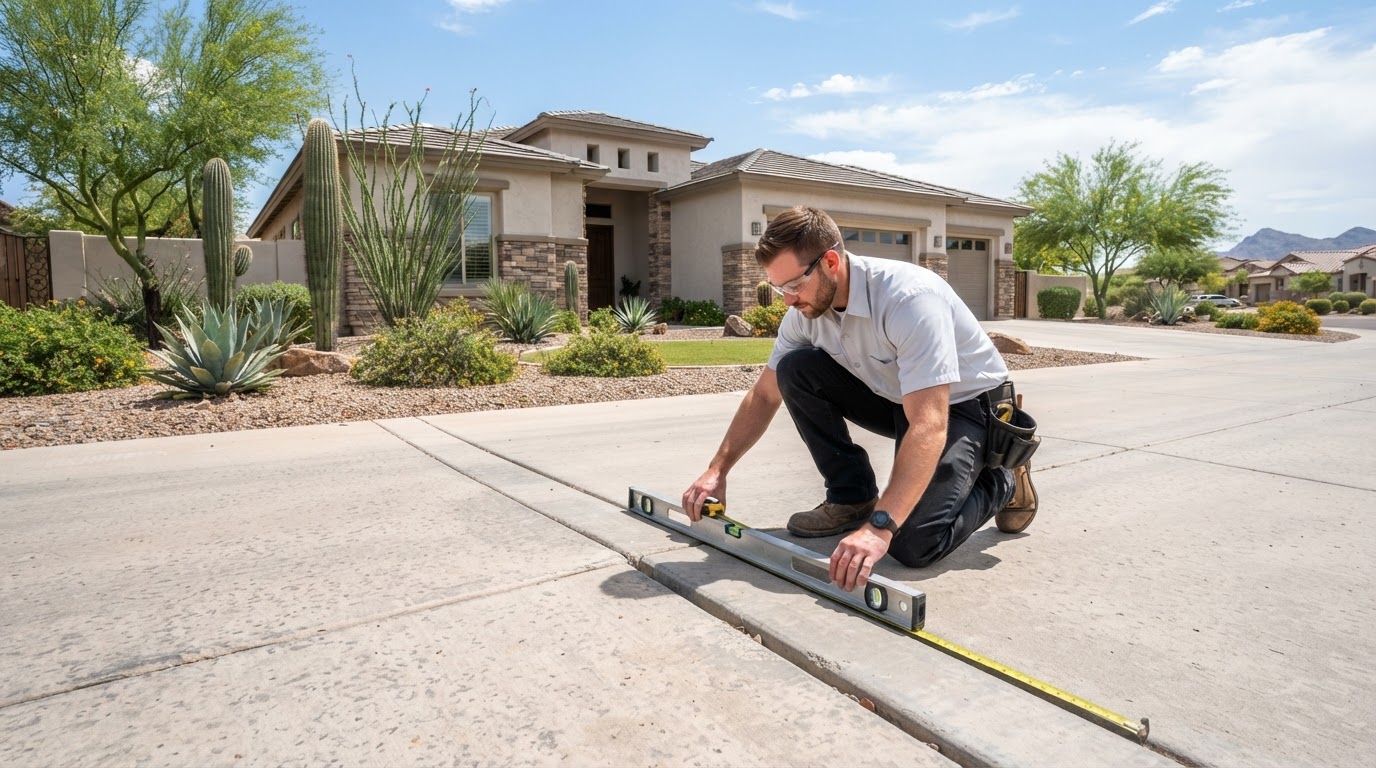
We walk the slab and check for cracking, displacement, joint misalignment, and surface drainage direction to understand what the Queen Creek concrete is actually doing.
Measure Slab Elevation
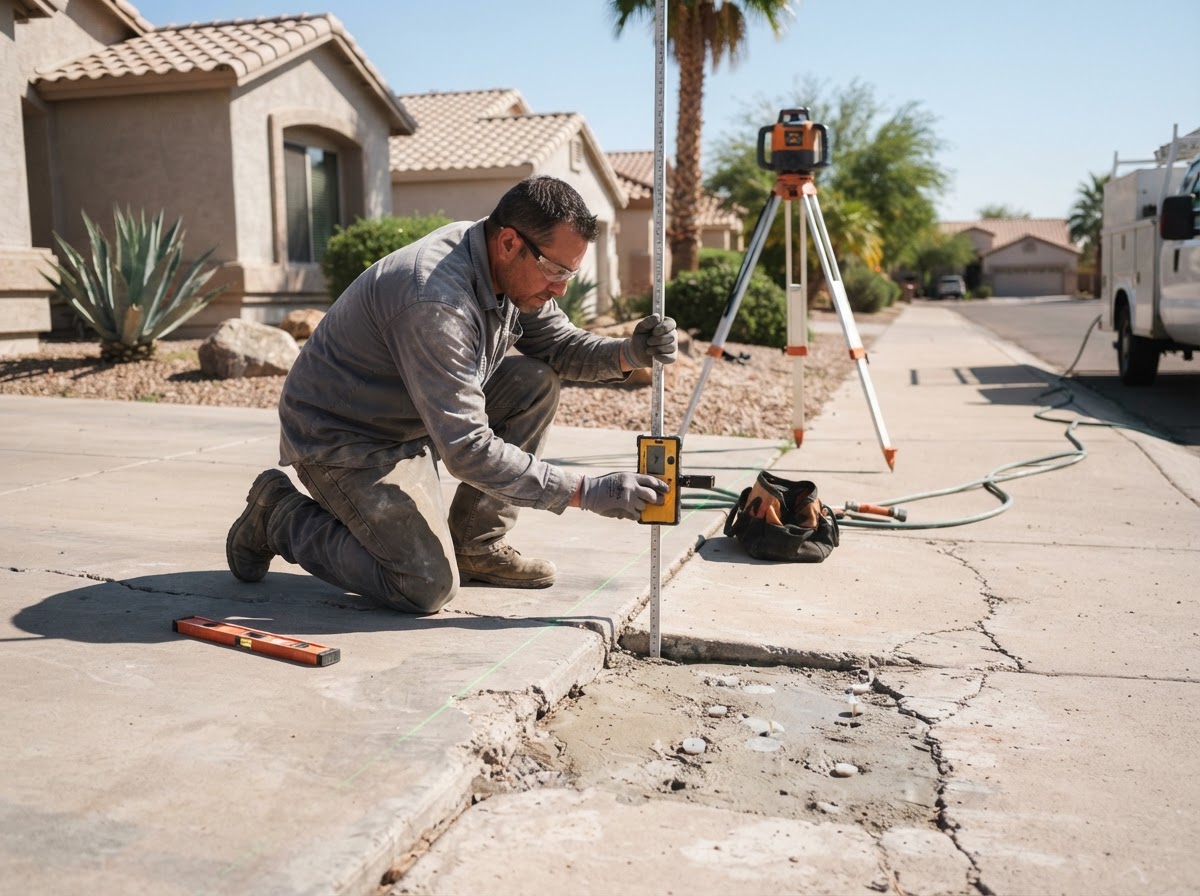
We take elevation measurements across the settled panel and against the adjacent surfaces to quantify the amount of lift needed and identify where support has been lost.
Assess Settlement and Void Context
We look for voids beneath the slab, water movement or washout patterns, and the fill and compaction context that may explain why the panel settled.
Choose the Suitable Method
Based on slab condition and void context, we select polyurethane foam injection or cementitious mudjacking — whichever suits the Queen Creek slab and the lift.
Provide Scope and Estimate
We explain the scope, the method, the planning cost range, and the next step clearly before any work begins, so you know what you are approving.
Controlled Lifting or Void Filling
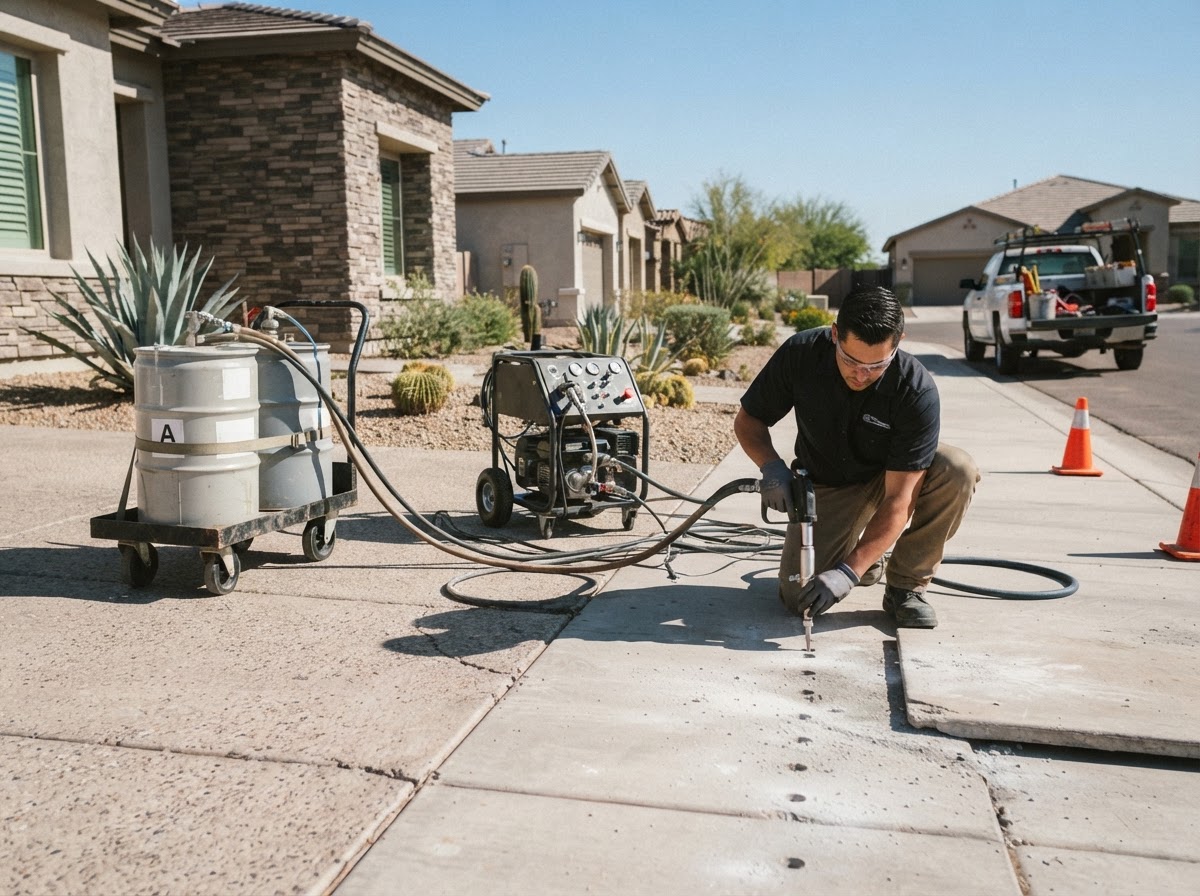
Material is injected in a controlled sequence to fill the void and produce a gradual, measured lift, with elevation checked against the surrounding slabs.
Alignment and Drainage Observation
The finished alignment, joint match, and drainage direction are reviewed to confirm the lift achieved the intended result.
Patch, Cleanup, and Final Review
Injection points are patched, the work area is cleaned up, and the finished surface is reviewed with you before the crew leaves the Queen Creek site.
What Does Concrete Leveling Cost in Queen Creek?
The ranges below are typical market-level planning ranges for the Queen Creek area, not binding quotes. An on-site evaluation determines the actual scope, method, and price for your slab.
Small localized correction
Approximately $500–$1,500
Typically covers a single settled panel or a focused trip-hazard lift. Minimum service charges can materially affect very small repairs.
Typical sidewalk or patio project
Approximately $800–$2,500
Covers a small group of residential panels such as a sidewalk run or patio section. Final price depends on panel count, lift, and access.
Driveway or multi-panel residential project
Approximately $1,200–$4,000+
Covers larger residential driveway and multi-panel scopes. Number of slabs, amount of lift, and material volume move the number.
Pool-deck, garage, or substantial void-fill work
Approximately $2,000–$6,000+
Reflects bigger slabs, deeper voids, heavier material volume, or complex access. Method and landscape or drainage constraints strongly affect price.
What moves the number: slab count and area, amount of lift, void volume, access, slab condition, method selected, and landscape or drainage constraints. Polyurethane systems may price differently from cementitious mudjacking. We are not able to confirm a final price without evaluating the slab in person.
Request Your Queen Creek Estimate
Fill out the form and a team member will reach out about your Queen Creek concrete leveling project. All five fields are required; the text-message consent boxes are optional and never required to request an estimate.
Request a Concrete Leveling Estimate
All fields are required. Get a straightforward estimate from a local concrete leveling specialist.
Prefer to talk it through?
Call Chandler Concrete Leveling directly. We will ask about the surface, the settlement, and the access, and explain the likely scope and cost range.
Call 480-757-234510+ Years Experience · Insured
Queen Creek Concrete Leveling FAQs
Do you provide concrete leveling throughout Queen Creek?
We provide concrete leveling throughout Queen Creek subject to project type, slab condition, access, and scope. Coverage is confirmed as part of the estimate rather than promised before evaluation. Queen Creek's broad growth pattern means we evaluate each property on its own conditions.
How much does concrete leveling cost in Queen Creek?
Concrete leveling in Queen Creek typically ranges from about $500–$1,500 for a small localized correction up to $2,000–$6,000+ for larger pool-deck, garage, or void-fill scopes. The final price depends on slab count, lift amount, void volume, access, and method. These are planning ranges, not binding quotes.
Can a sunken Queen Creek driveway be lifted instead of replaced?
A sunken Queen Creek driveway can often be lifted instead of replaced when the slab remains substantially intact and the underlying void or settlement is compatible with controlled lifting. Replacement may make more sense where the concrete is severely cracked, shattered, or deteriorated. We evaluate the slab condition honestly before recommending a path.
Can newer concrete slabs in Queen Creek still settle?
Newer concrete slabs in Queen Creek can still settle when the fill or subgrade beneath them was not uniformly compacted, or when irrigation and drainage move material out from under the panel. Slab age alone does not guarantee stability. We do not imply that new construction is inherently defective, but newer-growth areas do see settlement where fill and drainage conditions support it.
Can irrigation or runoff contribute to slab settlement?
Irrigation and runoff can contribute to slab settlement in Queen Creek because landscape watering and drainage concentration keep the subgrade wet and can carry fine material out from under exterior slabs. On large residential lots, these patterns are common around driveways, walkways, and patios. We look for them during the evaluation.
Can pool deck or patio concrete be leveled in Queen Creek?
Pool deck and patio concrete in Queen Creek can often be leveled when settlement has tipped one section below another and the slab is a suitable candidate. Lifting material is injected through small ports to fill the void and raise the section gradually, with equipment positioned safely away from the pool. Severely deteriorated slabs may need replacement instead.
Is polyjacking available for Queen Creek properties?
Polyjacking is available for Queen Creek properties where the smaller injection holes and lighter expanding polyurethane material suit the surface and access. We choose between polyjacking and mudjacking based on the slab condition, the void, and the lift requirements. Both methods are distinct and neither is universally superior.
When is replacement a better choice than lifting?
Replacement is a better choice than lifting when a Queen Creek slab is severely cracked, shattered, deteriorated, or badly displaced — conditions that make it unsuitable for controlled lifting. We do not promise that every slab can be saved. Honest evaluation of condition, crack severity, and settlement amount is what lets us give you the right recommendation.
Request Concrete Leveling in Queen Creek
Call now, or send your project details and a team member will reach out about your sunken concrete.
10+ Years Experience · Insured
Send Your Estimate Request
All five fields are required. The text-message consent boxes are optional and never required to request an estimate.
Call Chandler Concrete Leveling
A short phone call is often the fastest way to understand whether leveling is the right fit for your Queen Creek slab.
Call 480-757-2345- 10+ Years Experience
- Insured
- Chandler & East Valley service expertise